Wednesday, April 17, 2013

4 hours, 9 minutes, and 43 seconds: the 2013 Boston Marathon

4:09:43.  That's what the marathon clock read when the first of two blasts ripped through hundreds of spectators and runners along the finish line of the 117th running of the Boston Marathon; a race I had just finished an hour earlier.  

Today, as I struggle to comprehend the events that occurred in Boston on Monday April 15, 2013, I truly realize just how close I had become to being in the middle of the devastation.  9/11, Virginia Tech, Newtown, Atlanta, Columbine, Aurora, Oak Creek, Oklahoma City, the list grows.  You can't truly grasp the enormity unless you or your loved ones are involved.  I get it now.

The lights of downtown Boston the night before the marathon

Greg McMillan released his new book at this year's Boston Marathon Expo.  In doing so, McMillan Running Company had a booth for the three-day event.  We sold copies of the book, watched Greg sign away, and, most importantly, had the opportunity to meet hundreds of athletes that have worked with us over the years.  

The McMillan Running booth at the expo.

Greg McMillan, Miguel Almeida, and I at the Boston Marathon Expo

I saw old and new ultrarunning buddies.  Hung out at the adidas booth and attended one of their event soirees.  On race day, I bumped into a number of friends on a race course with more than 27,000 runners strung out across it.  I miraculously dodged countless runners as we dipped, wove, and danced through fast moving and crowded aid stations.  Several friends were able to spot me from the sidelines and cheer me on through the throngs of runners.  Our weather was ideal, much better than the heat and humidity folks struggled through a year earlier.  I ran for 26.2 miles and just barely squeaked under the 3-hour mark by 28 seconds.  I had finally run the famous Boston Marathon!  All amazing benefits of good timing.  

Greg and I post race.  The explosions would occur 40 minutes later and a block to our right. (photo by Tracy McMillan)

However, when timing really counted, I found myself among the extremely lucky.  I was back in my hotel, about three quarters of a mile from the finish line, when the bombs exploded.  Many of my friends and athletes I coach were much closer and missed the explosion by mere minutes.  Then there were those literally standing on the bombs when they detonated.  I, you, we could have very easily been in their place, with their injuries, and emotionally and physically scarred forever.

After the initial disbelief had faded, anger was certainly one of my first real reactions.  "What I wouldn't give to get my hands on the person or persons responsible."  I actually spent time scheming of ways how I, personally, could end that person's life as slowly and as painfully as possible.  Then I took a breath and realized I had immediately brought myself to their level and that the health of my family, my friends, and myself were paramount.  I had to reach out to everyone:  my friends, my coaching athletes, my colleagues and their families and make sure everyone was okay.  I had to let my own family know I was safe.  

Monday evening I ventured from my hotel, skirted around the closed and closely guarded city blocks, to Boston Common to have dinner with friends.  Columbus Avenue was lined with at least two dozen pre-postioned ambulances.  I walked by a building that had been turned into a staging area.  Soldiers dressed in full body armor and armed with assault rifles guarded the doors.  Within stood marathon runners still dressed in their day's running attire and wrapped in foil blankets.  They still hadn't made it back their hotels.  News vans and trucks of all sizes littered the streets as reporters spoke into cameras.  Though the state of emergency was apparent this city was still alive with people continuing to do what they needed to do.  Boston did not close shop and lock the doors.

Ambulances staged on Columbus Avenue.

What makes the bombings at the 2013 Boston Marathon so horrific are the fact that they were carried out intentionally and with such malice and evil intent.  The purpose being to incite terror, fear, and destruction on the innocent and to alter the way YOU live your life and make decisions.

I believe in karma.  Those that caused the Boston Marathon tragedy will get what they deserve.  We need not worry about that.  Now is the time we must support those injured and those that have lost the ones they love.  Reach out to those who love you, let them know they are in your thoughts.  We will continue to run forward.  The 118th Boston Marathon will go forth on April 14th, 2014.  27,000 ambitious runners will again toe the line and show more strength and solidarity than ever while striding down the home stretch on Boylston Avenue.

The start of the 2013 Boston Marathon (photo by the Washington Post).

Here are a few other pieces by running authors I admire.  Here they share their thoughts on the awful tragedy in Boston:


Thursday, April 4, 2013

Training Volume


My next training column installment on iRunFar.com:  Training Volume

Training volume is the ultrarunner’s top concern. Without a solid endurance foundation those 50-mile, 100k, and 100+ mile races will be extremely difficult to complete. However, overdoing the miles can quickly lead to our undoing in the form of injury, chronic fatigue, and poor performance. The goal is to develop an approach that will challenge you, but create only positive training benefits...read the rest here.

Thursday, March 21, 2013

The 2013 adiUltra Team Video


Meet the 2013 adiUltra Team!


adiUltra: Becoming a Team


Tuesday, March 5, 2013

Unbonk!


My next column installment for iRunFar:  Unbonk!  Read it here.


Monday, February 25, 2013

2013 Moab's Red Hot 33K and 55K: An adiUltra Team Introduction

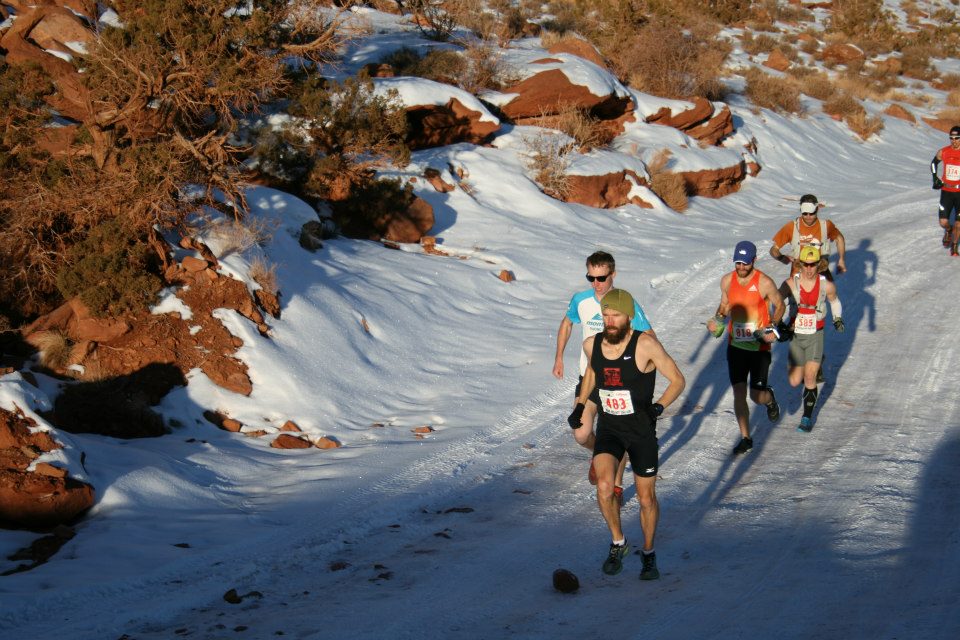
Chris Martinez, the race director for the Moab Red Hot 33K and 55K, rang me last fall and shared that he'd be opening up his event to 800+ runners.  I wasn't surprised, his races have become well known winter icons in the trail racing world.  The 33K serves as the first race of the year for the La Sportiva Mountain Cup Series and the 55K acts as a competitive fitness test for hundreds of ultramarathoners.  You can't beat this contest's location: Moab, Utah.  Smack dab between Arches and Canyonlands National Parks and a finish line on the banks of the mighty Colorado River.  Red, sheer sandstone cliffs, petrified sand dunes, and the mighty snow covered La Sal Mountains act as the backdrop.

So, it's not hard to imagine how this little race, first run 2004, as a Fat Ass event, has blossomed into the behemoth it is today.  On that inaugural February day the course ran on the opposite side of the Colorado River.  With an arrow volley from Roch Horton, 44 runners headed up Pritchett Canyon, down Hunter Canyon to Kane Creek Road, over Hurrah Pass, past "Camelot", through Jackson Hole, and up to and down Amasa Back.  Then, in 2007, Martinez gave rebirth to this event and its course as it's known today.

Paul Dewitt on the cover of the 2004 edition of Ultrarunning Magazine.  He was the first to descend into icy Hunter Canyon that day.  He kept his lead and won the event in 3:57 by out kicking Grand Junction's Kevin Koch.  Dudes like Koerner, Meltzer, Hesseck, Vega, Ostrom, Graubins, and Torrence would give chase.  Crested Butte's Anthea Schmid would out run Darcy Piceu (now Africa) and Helen Cospolich to win in 4:39.  There were also 14 finishers in the 12 mile fun run option and a 50k mountain biker in the mix.

The opening lines of the story, by Jana Gustman, and a photo (by Jeff Heasley) of Roch Horton threading the bullseye with his bow and arrow to get the event underway.

2013 marked my fifth return to Martinez' official event.  This year I was able to wrangle the entire newly formed adiUltra Team into showing.  Like other teams before us, notably the Pearl Izumi Ultrarunning Team, we felt this a good place to have everyone together so team members could meet and greet one another.  Even though they had other racing plans, work to contend with, and some were recovering from illness they all put on a smile and ran either the 33K or 55K.  I look forward to seeing what this team does in 2013.

Unfortunately, I wasn't able to catch a shot of our seventh adiUltra Team member Paulette Zillmer (who was recovering from a root canal, but ran the 55K anyway).  Be on the look out for her in these upcoming races:  Gorge Waterfalls 50K, the Wasatch Front 100 Mile, and as she defends her title at the Zane Grey 50 Mile.  Check out Paulette's team profile here.

Full 33K and 55K race day results can be found here.  On to the photos...

The adiUltra Team (led by Zoroaster) heads out on Kane Creek Road (the setting of the 2004 Red Hot) for a pre-race shake out run. (photo by Brianna Torres)

Race Director Chris Martinez assumes his race day position behind the megaphone.

Runners begin the first of many climbs as the "red hot" sun shines on.  (photo by Matt Clark)

The 55K lead pack with Rob Krar, Dakota Jones, Brian Tinder and Kevin Koch.  (photo by Jo Weakly Agnew)

The 33K lead pack with Jason Bryant, Trent Briney, Josh Brimhall and James Bonnett.  (photo by Jo Weakly Agnew)

Typical course terrain for roughly the first 17 miles.  The second half?  Well, that's a different story.  (photo by Jo Weakly Agnew)

Flagstaff's Rob Krar would go on to set a new Red Hot 55K course record in 3:44:05.  Factoid:  Krar ate 11 gels in the course of this race.  That's solid fueling!  (photo by Kristin Wilson)

adiUltra Team member and 2:32 marathoner Emily Harrison would set a new women's record in the 55K by breaking the tape in 4:24:02. (photo by Kristin Wilson)

Two weeks after his Sedona Marathon win, adiUltra Team member Brian Tinder cracks the top ten in the 55K event. (photo by Kristin Wilson)

Tinder with the classic La Sal Mountain backdrop.  (photo by Kristin Wilson)

adiUltra Team member Ian Torrence misses the masters podium by two minutes.  (photo by Kristin Wilson)

Krar refuels quickly at the Metal Masher Trailhead. (photo by Jo Weakly Agnew)

adiUltra Team member Trent Briney finishes third in the 33K.  (photo by Kristin Wilson)

Runners strung out along the course. (photo by Jo Weakly Agnew)

A week after his win at the Pemberton Trail 50K, adiUltra Team member and Red Rock Running Company (Las Vegas, NV) owner Josh Brimhall would stretch his legs in the 33K.  (photo by Kristin Wilson)

Crown King Scramble 50K's race director and adiUltra Team member James Bonnett runs the 33K event in good form.  (photo by Kristin Wilson)

Bonnett and Briney run stride for stride in the final four miles of the 33K.  (photo by Travis Zeke Burmaster)

Brimhall paces La Sportiva runner Jason Bryant in the final miles of the 33K.  (photo by Travis Zeke Burmaster)

The winning women:  Emily Harrison and Flagstaff's Alicia Shay (the 33K winner) enjoy the post-race festivities. (photo by Erin Strout)


Wednesday, December 12, 2012

Your Ultra-Training Bag of Tricks: Two-A-Days


Your Ultra-Training Bag of Tricks:  Two-A-Days

In this month's irunfar column, discover if two-a-day runs are right for you and how to properly implement them in your training schedule.

Wednesday, December 5, 2012

The 2012 JFK 50 Mile: 50 Years of Ultrarunning History

I get asked this a lot:  Ian, why do you always return to JFK?  Frankly, this is the best way I can explain it.  In 1994 I picked my first ultra and the ultra I chose would rise like no other.  By pure happenstance I was laid comfortably in the arms of the JFK 50 Mile, one of the biggest, most competitive ultras in North America.  Do well at this race and you're golden.  Need an entry to Western States, need a qualifier to join the National 100K Team, need a shoe sponsor, or points for your Ultrarunner of the Year vote:  run JFK.  Do well and JFK will provide.  It wasn't always like this...

When I ran JFK for the first time you could have strolled down to Boonsboro High School on race day morning and entered the race for $100.  A hefty price back then, but totally reasonable now-a-days.  Today there's a lottery and it's tough to get in.  In my newbie ultra experience my ultrarunning hero, Eric Clifton (who would never gain a shoe sponsorship), would set a course record that would stand for 17 years!  Those that finished behind him that year were no joke either:  Carl Anderson (Ann Trason's husband and long time record holder of the Quad Dipsea), Mike Morton (Western States winner and 24-hour American Record...need I say more), David Horton (hello Trans Am, AT, and PCT), Tom Rogozinski (the youngest Trans Am finisher at 22 yrs.), Courtney Campbell (who would go on to win the 1999 JFK), Frank Bozanich (again, please don't even ask, so many American and course records it's dizzying), Barry Lewis (this guy has done it all successfully), Hinte, Lieb, Drach, Canadian Michalack, Zaruba, and Shilling (hey, why not win the Speedgoat 50K 16 years later).  Multiple top-ten finisher Carolyn Showalter (please look at this JFK rap sheet) would win the women's race in under 8 hours that year.  This would be my introduction to ultrarunning...and after that race I would clearly never be able to get enough.

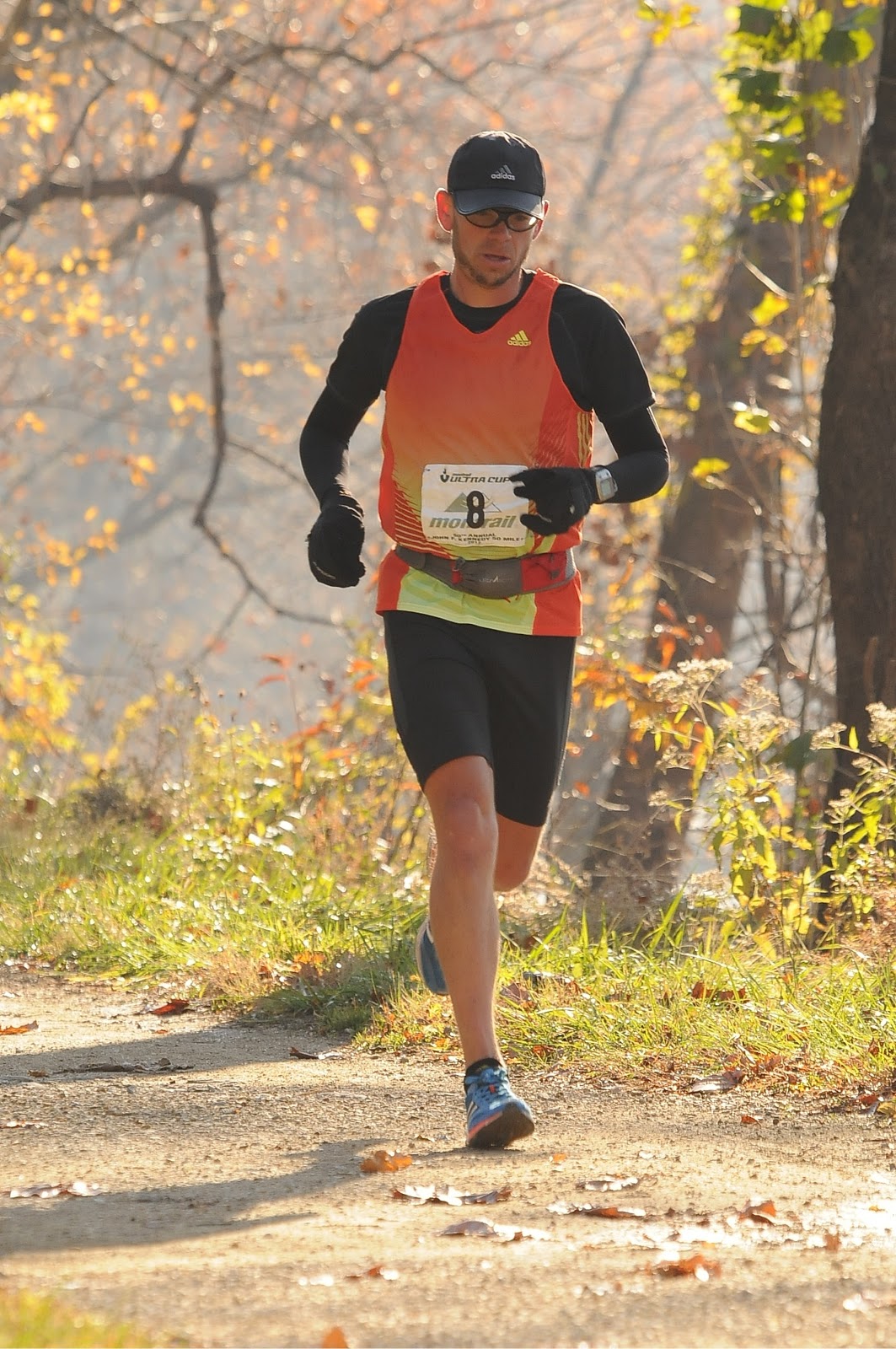
So, yes, my annual pilgrimage occurred once again this year.  No matter where I'm living, what I'm doing, how good or bad I feel I've been lucky enough to make it to Boonsboro for each of the past 19 JFK 50 Mile races.  This year produced my 18th finish and my 14th sub-7 hour performance.  I'm proud of this and I'll have no problem blurting that statistic out while out on the town.  However, what makes the event, for me, is my innate ability in wrangling a handful of unsuspecting compadres into meeting me at that start line in western Maryland.  I promise them a glorious experience along the Appalachian Trail, C&O Canal, some of the finest rolling backroads Maryland has to offer, the largest and one of the most competitive fields in North American ultrarunning, but, most importantly, a chance to become part of ultrarunning history!  JFK has never disappointed and this year would be no different.  Course records would fall on the men's and women's sides.  Names like Ellie Greenwood, Max King, Trent Briney, and Emily Harrison would now forever ring in the ears of anyone and everyone who breaths ultrarunning.   Per usual, the weather would prove ideal and 967 runners would successfully find the finish line in Willamsport, MD.

So, Ian, why do you always return to JFK?  My answer:  Quite simply...it's a different race every year and I have fun being a part of it.

The amazingly fast 2012 race results can be found here.

Fellow masters ultrarunner (I love that I can say this now) Andy Jones Wilkins quizzed me on my latest finish.  Find that Inspired Stubbornness interview here on irunfar.com.

You know the drill...the rest of the story follows in pictures (photo credits to the David Riddle family, Ray Jackson Jr., Jo Weakley Agnew, and Geoffrey Baker Photography):

Pre-race dinner with those I roped in to joining me in Maryland:  Josh Brimhall, Shad Mickelberry, and Emily Harrison.

Seconds before the start...No problem, I'll be the only one faced in the other direction.

And they are off...

Running through downtown Boonsboro.

Zach Gingrich, Josh Brimhall, and Trent Briney (2nd place overall) on the early miles of the Appalachian Trail.

Doing my thing on the AT.

Josh and Emily hit the pads in Weverton in 1:57.

Passing through Weverton aid station.

Max King (winner and new course record holder) rolling on the Canal.

Doing my thing on the Canal.

Ellie Greenwood wins, sets a new course record, and high fives her crew chief, David Horton (see above), in the JFK finish chute.

Two class acts (Greenwood and Harrison) congratulate each other upon finishing and running the two fastest JFK's ever.

Congratulating Blake Benke on his 12th JFK finish.

These ladies ain't no joke.


Your Moment of Zen

She so wanted to run with.  Don't worry Z I'll get you one of those orange vests so you can pace me next year.